
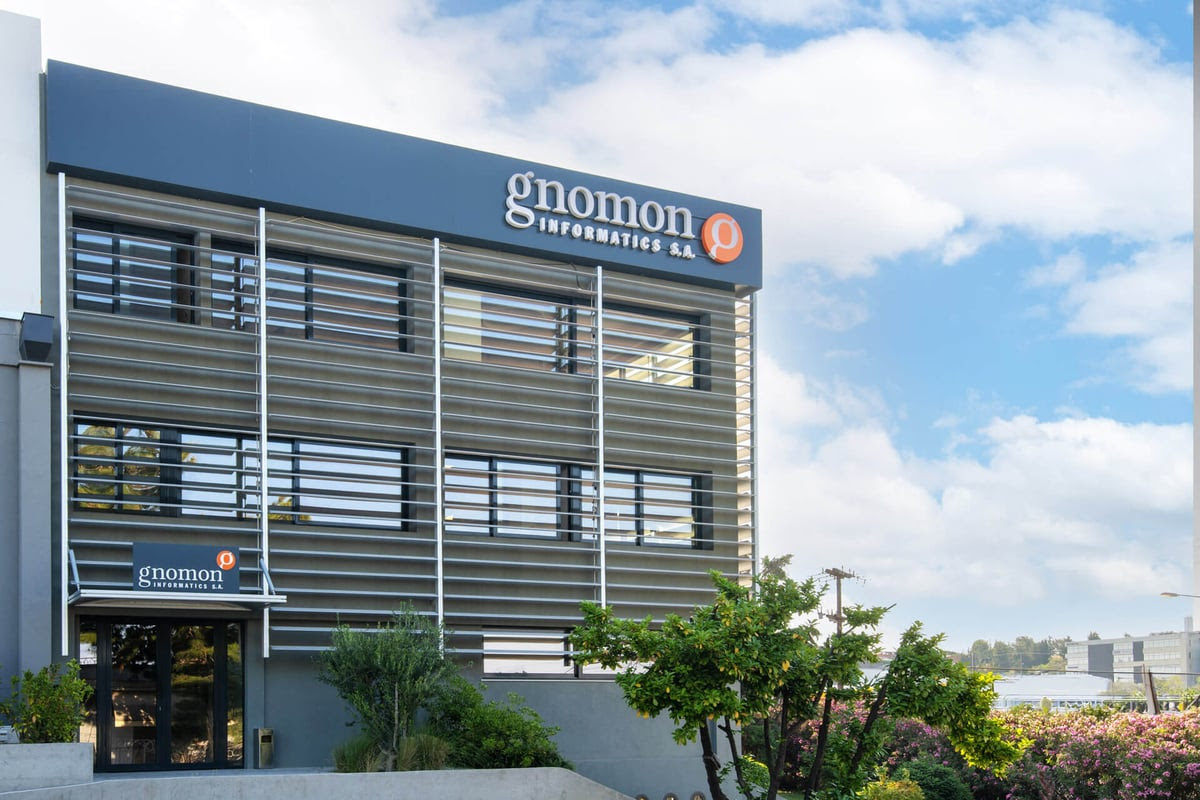
Gnomon Informatics: Double-digit growth rates and a +37% increase in profits
With a focus on strategic partnership and entry into the Capital Market
Gnomon Informatics S.A., a pioneer in the Digital Health sector, achieved significant growth rates and a +37% increase in profits in 2025, distributing a dividend of €0.55 per share from its financial year profits, as well as a productivity bonus to its employees.
Gnomon Informatics, which has been consistently profitable since 1994, achieved an average annual increase of +22.5% in consolidated turnover and +55.3% in operating profitability (EBITDA) during the 2018–2025 eight-year period.
Gnomon Informatics, which, based on first-half 2026 data, is achieving its target for double-digit growth rates in the current financial year as well, seeks to accelerate and expand its growth priorities in the fields of Digital Health and Elder Care support, through a strategic partnership and/or via its independent listing on the Capital Market.
Financial Performance Evolution
Regarding the evolution of key financial metrics for 2025, for both the Company and the Group (including Vellum Business Consultants S.A.), these were as follows:
Turnover: Group turnover reached €5,768,703.56, compared to €5,204,094.05 in 2024 (+10.8%). Company turnover, respectively, reached €5,445,350.75, compared to €4,885,943.37 in the previous financial year (+11.4%).
Gross Profits: Group gross profits increased to €2,009,919.48 in 2025 from €1,836,257.75 in 2024 (+9.5%). Company gross profits increased to €1,933,058.73 in 2025 from €1,747,975.51 in 2024 (+10.6%).
Selling and Administrative Expenses: Gnomon Informatics achieved a significant reduction in selling and administrative expenses—both at the Group level and at the Company level—both as a percentage of increased revenues and in nominal terms. The reduction percentages ranged from -14.3% to -15.2%.
Net Profits Before Tax: At the Group level, pre-tax profits reached €1,383,596.05, up from €1,012,277.77 in 2024, marking an increase of 36.7%. Company pre-tax profits reached €1,384,136.09, up from €1,011,235.10 in 2024, marking an increase of 36.9%.
Net Profits After Tax: Group net results after tax for the 2025 financial year reached a profit of €1,001,975.82, compared to €810,317.66 in 2024, while Company net results reached a profit of €1,002,991.33, compared to €811,230.73 in the previous financial year.
The increase in operational activities of Gnomon Informatics S.A. during 2025 contributed to a growth in total cash reserves for the Group by €1,449,400.84, compared to a decrease of €(113,831.64) in the previous financial year. For the Company, total cash reserves increased by €1,476,219.95, compared to a decrease of €(191,141.13) in 2024.
Liabilities – Cash Reserves: Total liabilities for the Group as of 31/12/2025 stood at €2,563,379.61, compared to €1,694,206.09 as of 31/12/2024. Group cash reserves as of 31/12/2025 reached €2,505,881.00, compared to €1,056,480.16 at the end of the previous financial year.
Gnomon Informatics S.A. focuses on the Digital Health sector, with numerous projects for Greek and European health authorities and enterprises. In 2025, among other achievements, it secured the project in Cyprus to create the unified digital citizen application, myHealth@CY. Additionally, it entered the Czech market with the deployment of its eHealthPass digital health platform at the St. Anne's University Hospital, while also taking on the implementation of North Macedonia's national Digital Health strategy as the consortium leader.
Three Business Units
Three distinct business units generate revenues for Gnomon Informatics: digital health, assisted living, and enterprise software. Across all units, the transition from projects to products drives the Annual Recurring Revenue (ARR) index to 80%. Expanding the distribution network into new foreign markets, broadening the existing one, and entering the retail market constitute strategic initiatives to further reduce reliance on the cyclicality of projects implemented under national development and investment funding cycles, thereby securing stability in growth rates.
