SETPE: €50M for AI in SMEs, 1,000 Tech Jobs, and New Rules for Public Digital Projects
The proposals presented by the Chairman of the Board, Anastasios Manos, to Prime Minister Kyriakos Mitsotakis ahead of the 90th TIF
Six proposals featuring clear objectives, defined timelines, and measurable outcomes to strengthen Greek software development companies and foster the further growth of Northern Greece’s tech ecosystem were submitted to Prime Minister Kyriakos Mitsotakis by the Association of Information Technology Companies of Greece (SETPE).
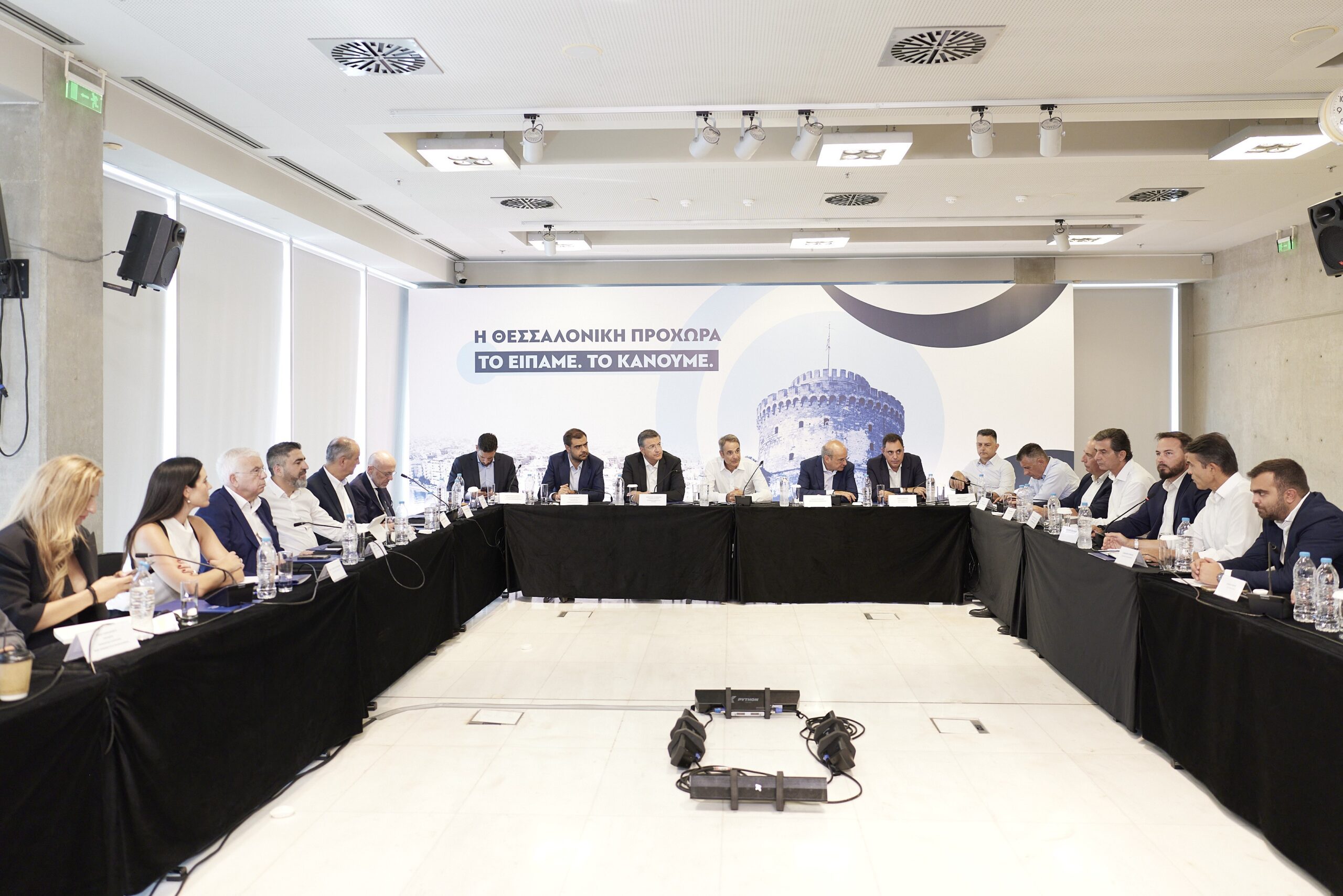
The Chairman of the Board of SETPE, Anastasios Manos, participated yesterday, Thursday, in the Prime Minister's meetings in Thessaloniki with representatives of production and scientific bodies, Local Government, and chambers of commerce, ahead of the 90th Thessaloniki International Fair, and delivered a memorandum to Mr. Mitsotakis outlining the positions and proposals of the institutional body he represents.
SETPE chooses to shift its focus from a general need for technology support to six pivotal proposals—three of national scope and three targeting Thessaloniki and Northern Greece—at a time when boosting productivity, enhancing investment, and managing the shortage of specialized human capital represent critical challenges for both the economy and the IT sector.
At the core of the proposals lies the design of "Digital & AI Upgrade 2.0," a new co-funding program for the substantive adoption of artificial intelligence, data analytics, cloud, cybersecurity, automation, and productivity software technologies by small and medium-sized enterprises (SMEs). SETPE proposes incorporating this program into the new NSRF (National Strategic Reference Framework), with a budget of €50 million, a subsidy rate of 50%–60%, and a target of benefiting more than 5,000 SMEs. The evaluation will not be limited to the purchase of tech equipment or software licenses, but will include a review of the actual operation of the digital solution and its impact on each enterprise's productivity. According to the proposal, SETPE requests that the program be launched within the first half of 2027.
At the same time, SETPE firmly reinstates its long-standing request for the recognition of human capital as a core investment in software development enterprises. Specifically, it proposes amending the Development Law so that a portion of payroll costs tied to the development of new tech products, cybersecurity, cloud, and international commercial scaling can qualify as eligible investment expenditures. As highlighted in the memorandum, for software companies, the primary productive investment is not machinery and equipment, but the engineering and product development team.
In the field of public digital projects, SETPE recommends the establishment of a new framework designed to facilitate the participation of specialized small and medium-sized enterprises (SMEs), curb market over-concentration, and incorporate maintenance and operational costs from the outset. Key recommendations include the functional unbundling of projects into smaller lots, the adoption of open standards and APIs, mandatory 3-to-5-year maintenance provisions, and the phased deployment of innovation procurement tools, including Pre-Commercial Procurement (PCP) and Public Procurement of Innovative Solutions (PPI).
Particular weight is placed this year on Thessaloniki and Northern Greece, through three standalone proposals put forward by SETPE.
The first concerns the establishment of the "Thessaloniki Tech Export Hub"—a permanent internationalization mechanism for software and digital services companies, targeting the markets of the Balkans, Central Europe, and the Eastern Mediterranean. According to the memorandum, the Central Macedonia ecosystem has expanded from 21 companies and 220 employees in 2016 to at least 66 companies and over 2,400 employees today. The objective of developing the hub is to support 100 enterprises and secure 30 new international contracts or partnerships within two years.
The second proposal involves designing "Digital Talent North," a two-year pilot program offering 1,000 paid entry-level technology positions for graduates and reskilled workers in software, data/AI, cybersecurity, cloud, and QA (Quality Assurance). The program is proposed to be designed jointly with enterprises, the Aristotle University of Thessaloniki (AUTH), the University of Macedonia (UoM), the International Hellenic University (IHU), and research bodies, with the target that at least 70% of participants remain in a tech role one year after completing the program.
The third regional proposal calls for designating Central Macedonia as Greece's first "Innovation Procurement Region," enabling public entities, municipalities, and hospitals to test new technology solutions on a smaller scale prior to launching large-scale tenders. SETPE proposes the creation of a pilot fund of approximately €15 million to address 20–30 technological challenges across various sectors, including smart cities, healthcare, energy, logistics, civil protection, and administrative automation.
Furthermore, in its memorandum, SETPE highlights that several key demands previously submitted to the Prime Minister in 2025 remain highly relevant. Chief among these are the establishment of a Tech Visa, the creation of a government dashboard tracking active digital projects, the strengthening of R&D Labs, the certification of Greek software for public sector entities, and the institution of a permanent institutional dialogue between the government and tech sector stakeholders.
Central Pillar
"For the technology sector, general declarations of support are no longer enough; clear decisions with measurable results are required—decisions that mobilize investment, boost exports, and create new, highly skilled jobs. With the proposals we submitted, our goal is to move from simply identifying problems to executing targeted interventions at both the national and regional levels. SETPE stands ready to collaborate with the government and relevant ministries so that Greek software development companies become a central pillar of the country's new productive model," stated Anastasios Manos, Chairman of the Board of Directors of SETPE, following the meeting.